

How Not to Die on Mars
- 29th Apr 2026
- Author: Declan Bark
With the Artemis missions underway, and humanity’s return to the lunar surface just around the corner, right now could be a good time for us to think about the interplanetary next steps. Getting people to Mars has been a dream of space travel for decades! It is the closest planet that isn’t a ball of acidic heat (sorry Venus) and may have, at one point, had life living on its surface! A mission to the red planet, there and back, would take around three years and it is entirely possible for it to happen in our lifetime. Brilliant! So, what’s the issue?
Ever heard of Dust Devils or frostbite? You should probably get to know them…
Mars is not the magnificent red wonderland you may imagine it to be. It comes with dangers and problems of its own, with hazards of all sizes and origins. If you are a Martian astronaut currently on your trans-planetary flight, read on so I can be the one to detail to you just how to survive on Mars.
1. Landing
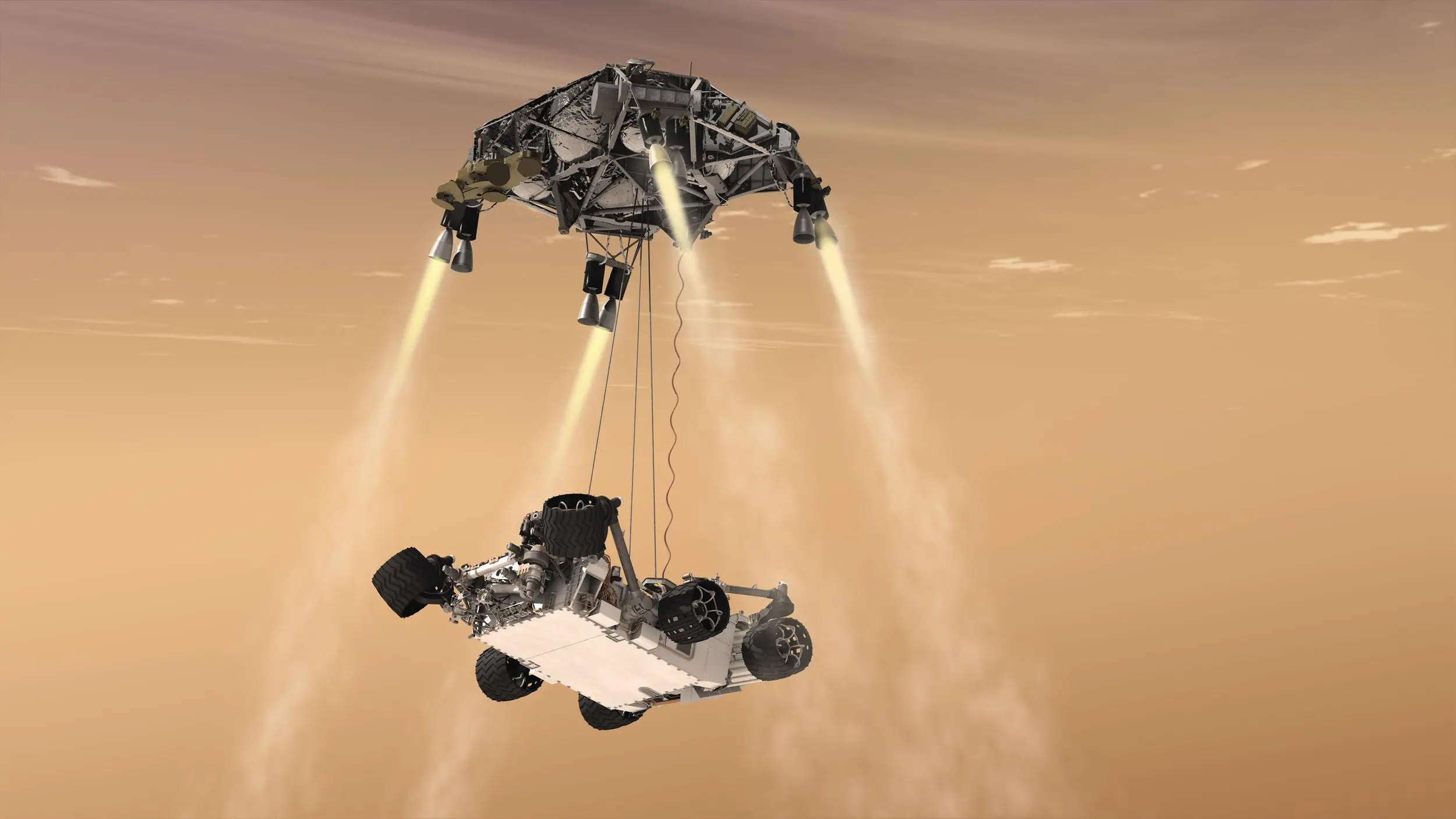
Here’s the thing, the dangers of the red planet actually begin before you’re even on the surface. In fact, it’s getting to that surface that is the issue. Mars has a very thin atmosphere, which means that to land safely, we’re going to need a lot of support.
On Earth, we can use parachutes and the natural drag of our thicker atmosphere to slow us down as we fall towards the ground, which we call aerobraking. With a thinner atmosphere, the mission of slowing yourself from speeds of 13,000mph to just a few mph is a lot harder and takes a lot of effort to get right. The landing is going to be risky and making things worse is the name
“The seven minutes of terror!”
Also referred to as “Entry, Descent, Landing”, missions to Mars will have a tense seven-minute landing process that could go wrong at any time.
Hitting the rusty surface at uncontrollable speeds is unlikely to go well for you, so it’s a good thing you have a few safety measures to prevent making a new Martian crater. Adding to the “terror” is that you are completely at the mercy of the landing team. Signals to Earth’s mission control take too long to be of any use, and by the time you’ve signalled for help, you may well already be on the planet.
2. Temperature
Picture it, a lovely crimson-red beach on Mars. The Sun is in the dusty sky and you’re sipping a cold Fanta Lemon while sunbathing. Sounds perfect! Mars has got to be hot… it’s red!
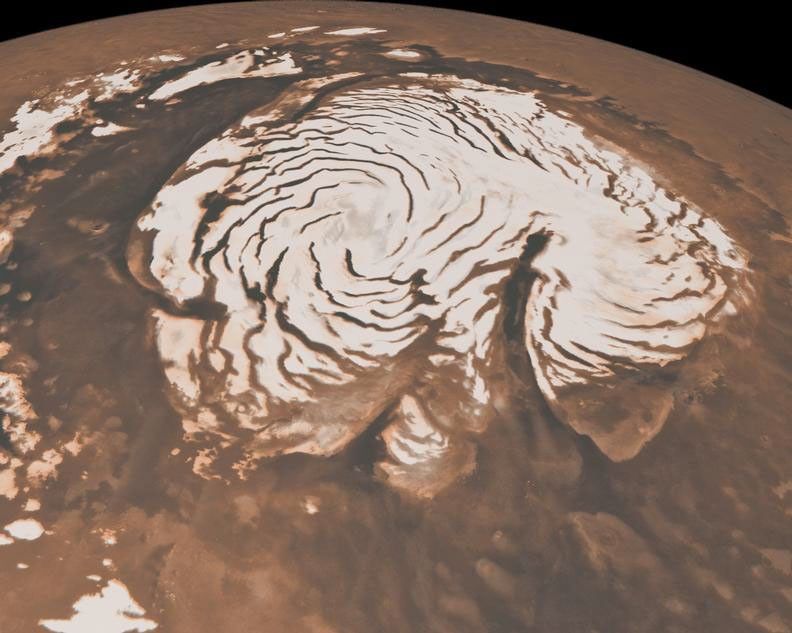
No. I’m sorry to tell you, Mars is a very cold place.
It’s further away from the Sun than Earth is, so it gets less heat and the thin atmosphere struggles to keep any of that slim heat in. If you were to be exposed to the cold, crisp air on Mars, your body would be whacked by average temperatures of around -63 degrees Celsius (-81 Fahrenheit). Martian astronauts are going to really have to bundle up because without the correct suit and temperature regulation, it’s not going to be pretty.
Imagine this, you are the coldest you’ve ever felt in your life. Now triple it. And maybe double it again. That is how cold you’ll be on Mars without anything to keep you warm.
If you’ve ever seen Total Recall, you might expect an eye-popping head-melting extravaganza if your helmet came off, but instead of popping out, your eyes would instead freeze solid. You wouldn't be able to blink or see, as finally you enter the phase I like to call “The human popsicle”.
Motor functions will cease; frostbite will take over and unfortunately not even a microwave will defrost you at that point.
Sounds scary but as long as you have your spacesuit and correct insulation layers, you’ll be okay…
3. Radiation
The radiation exposure on Mars is a bit different to here on Earth, again thanks to that thin atmosphere doing little to protect the planet. Because of this, astronauts will find themselves in an increasingly radioactive setting.
Radiation is caused by highly charged particles coming down from the Sun or artificial methods created by humans. These particles can be good! We can use them to clean medical equipment, and it can help provide us with vitamin D. But when exposure increases, those charged particles begin to attack our bodies, damaging our DNA and can cause untreatable diseases that are life threatening.
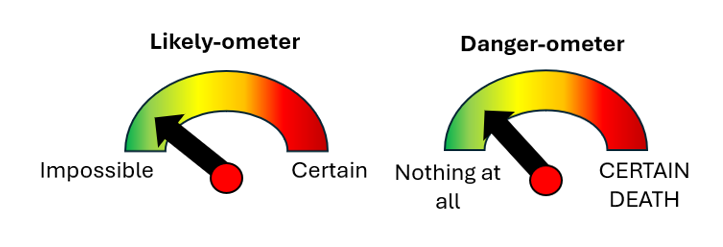
The radiation levels on Mars sit at around 0.67 (funny number) millisieverts (mSv) a day. That probably means nothing to you, but it is the equivalent of a full body x-ray scan or eating 6700 bananas each day. Did you know bananas are a little bit radioactive? Weird.
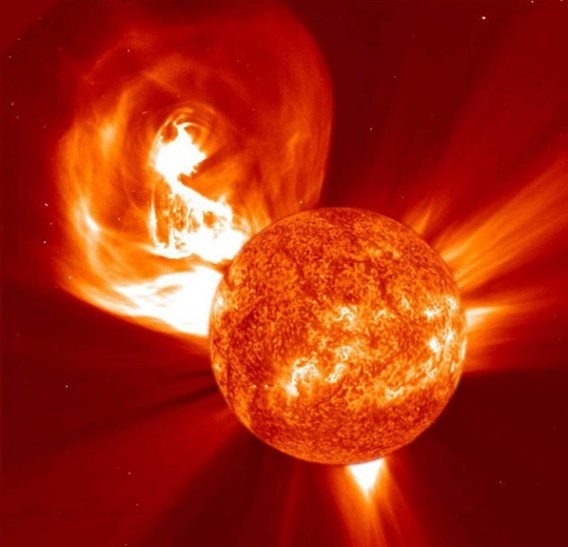
Anyway! One or two days is fine, nothing to report. But increased exposure will make you feel worse, your sickness chances will increase and eventually, so will the chances of death. Especially risky is being unprotected when a Coronal Mass Ejection (CME) occurs. A CME happens when the sun blasts some radiation and plasma out into the Solar System. We're protected from that extra radiation on Earth but on Mars those levels could really spike! So don’t risk it and use the adequate space suit protection! And if you want to learn more about Coronal Mass Ejections and the Sun, listen to our podcast episode about it!
4. Atmosphere
So, I keep mentioning the Martian atmosphere. It doesn’t keep the heat in and neither does it protect us from radiation. It also doesn’t do a very good job at being breathable. The air is 90% carbon dioxide, which is extremely toxic to us as oxygen-needing humans. I would recommend keeping your oxygen tanks plugged in, or you will get extremely dizzy and your heart rate will spike immensely.
The atmosphere also has very low air pressure, and this low air pressure causes your muscles and tissue to expand, causing pressure on your nerves to increase. This makes pain more intense, and if your body is freezing, the agony is going to be… well agonising. With your muscles tightening from the cold and your tissue expanding because of the air pressure, you’d be doing some pretty good Quasimodo cosplay.
The absolute most dangerous thing about Mars’ atmosphere however is another effect of the low air pressure. A phenomenon called “ebullism” happens, where due to the low air pressure, liquid boiling points lower dramatically, and the moisture on your body vaporises rapidly. This goes for the moisture inside your body too, so your blood is quite literally going to bubble and boil. You won’t be able to breathe, even with an oxygen tank, and you would absolutely die in minutes.
There are things that make my blood boil (looking at you 2006 Pluto decision) but Mars takes it a bit too literally.
5. Dust Devils
I’m not talking Dungeons and Dragons when I say Dust Devils, that would probably be easier to contend.
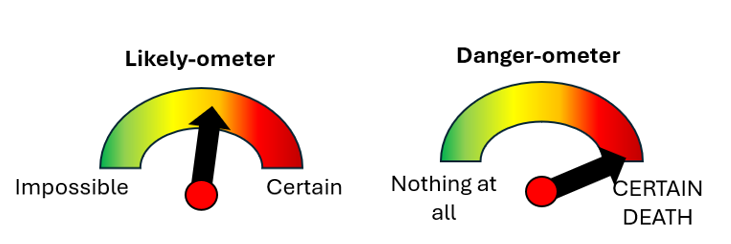
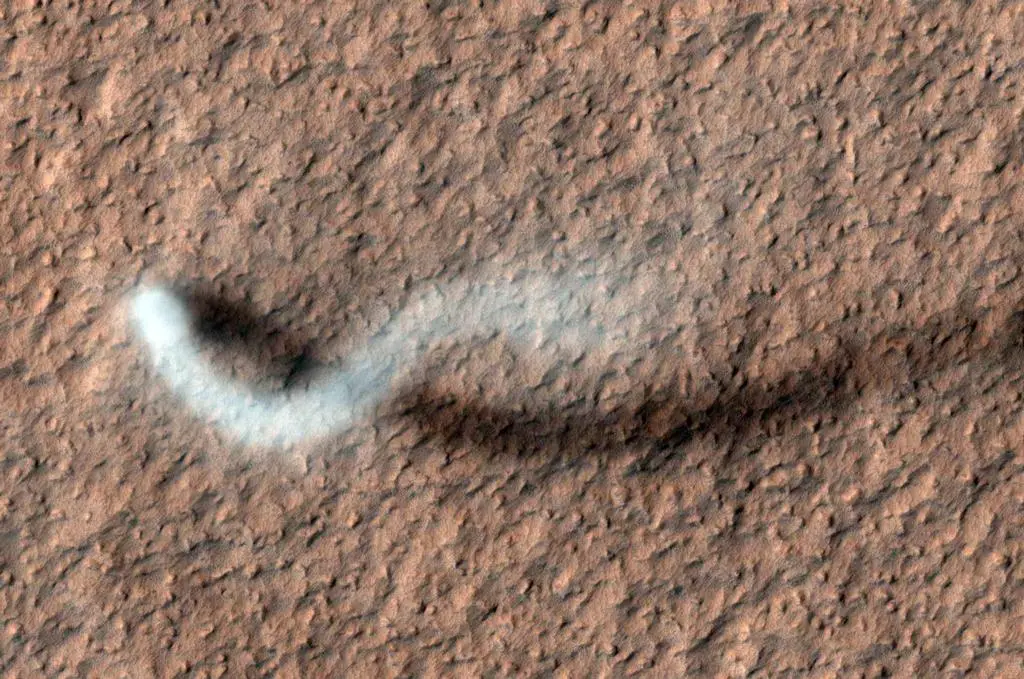
Martian Dust Devils are vortices (like a tornado) that roam the rusty surface, gathering debris as they move. They can be up to 200ft in width and move at around 12mph. I want every astronaut to read carefully: Pay attention to your surroundings! You don’t want to be turned into paste because you were too busy disassociating, do you? Look around and be aware of any dusty tornados hurtling your way, and if you’re vigilant you should avoid being blinded and then pummelled by debris or having tiny pieces of grit find their way into your spacesuit.
The grit is going to be electrically charged, as the particles are going to be constantly smashing into each other, which poses a threat to electrical equipment on your suit. It will stick to surfaces, including your helmet, and may find its way into the crevices on your suit. Don’t go breathing those pieces of grit in, as they’re sharp and jagged. Imagine swallowing a handful of needles or screws, it would feel the same.
Bonus Danger - Hostile Aliens!
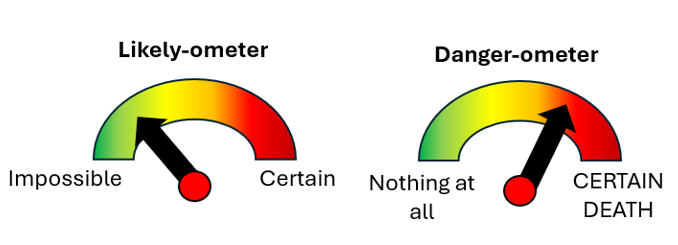
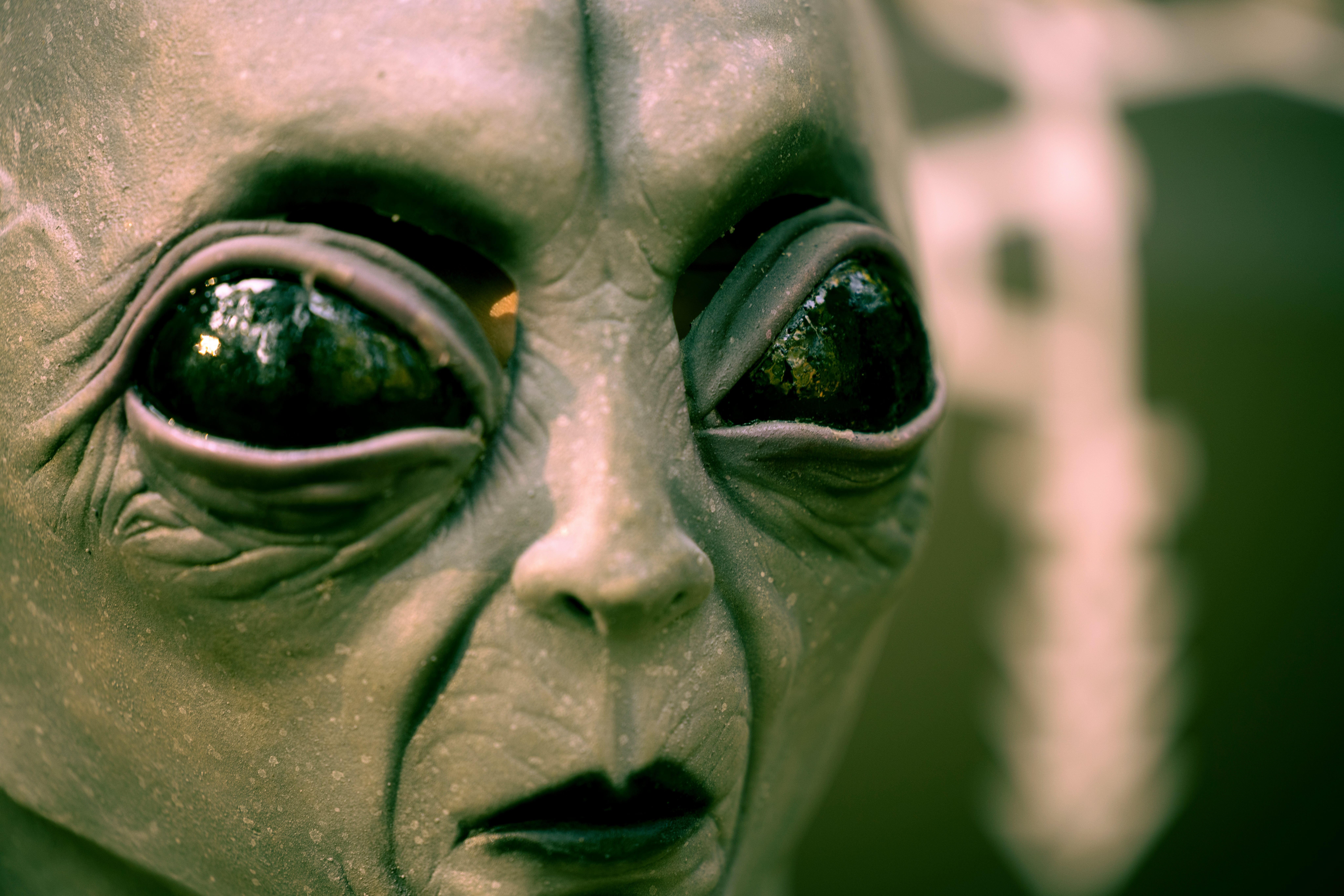
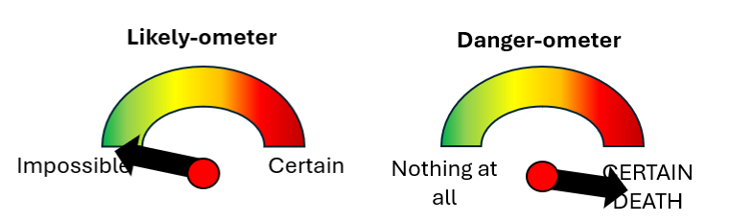
Suppose you land on Mars and are immediately accosted by hostile alien life. Think Mars Attacks! but even worse. What are you going to do? How will you negotiate peace between the planets?
I hope you’re not expecting me to answer that, my job description doesn’t cover hostile alien life I’m afraid so all I can do for you is manifest a peaceful resolution. Good luck, stay calm and dodge those laser blasters!
So, as you should have gathered, Mars is not the safest place in the solar system to be. But if you follow the guidelines and get yourself a risk assessment written up, you should thrive.
Good luck future Martian astronauts and thank you for taking that big next step for mankind!
Full references / credits:
(Banner image) Mars Surface. Credit: NASA
(1) Mars Sky Crane. Credit: NASA
(2) Northern Ice Cap of Mars. Credit: NASA
(3) Coronal mass ejection - a blast of radiation from the Sun. Credit: SOHO (ESA/NASA)
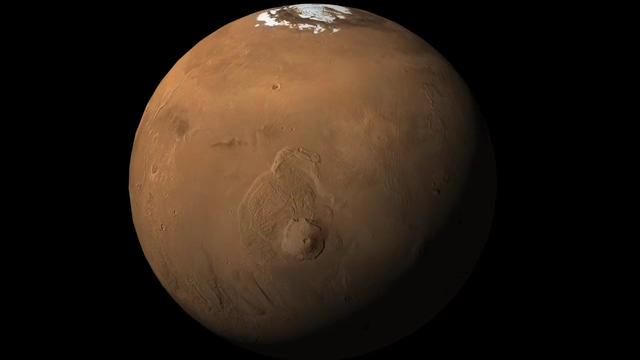
(4) Mars, with Olympus Mons Seen in the Centre of the Planet. Credit: NASA/JPL-Caltech/University of Arizona
(5) Martian Dust Devil. Credit: NASA/JPL-Caltech/University of Arizona
(6) Alien. Credit: Stephen Leonardi, Pexels – free to use (https://www.pexels.com/photo/gray-alien-mask-with-big-black-eyes-18779589/)
