
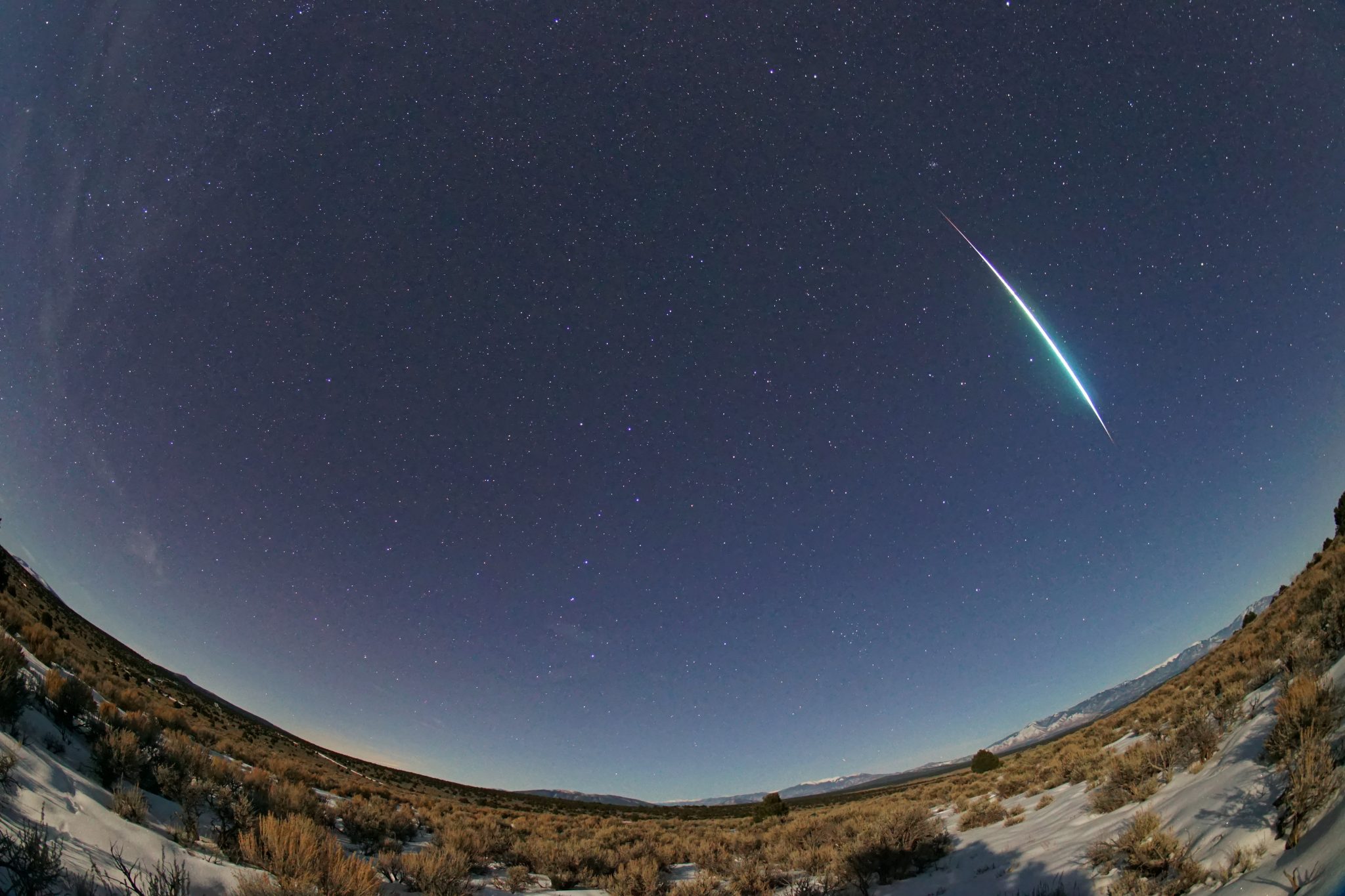
Quadrantid Meteor Shower
- 16th Dec 2025
- Author: Team Discovery (edited: Dhara Patel)
In 2026, the Quadrantid meteor shower peaks on the night of 3-4 January with up to 80 meteors per hour.
Quadrantids
As we head into the New Year we're treated to one of the best meteor showers of the year - the Quadrantids which peak on the night of 3-4 January 2026. This above-average meteor shower produces up to 80 meteors an hour in ideal conditions.
The cause of the Quadrantids is a bit of a mystery, but it’s thought that the asteroid 2003 EH1 is the source of the debris. If so, then the Quadrantids are similar to last month’s Geminids, which are also produced by a rocky body rather than an icy comet as typical.
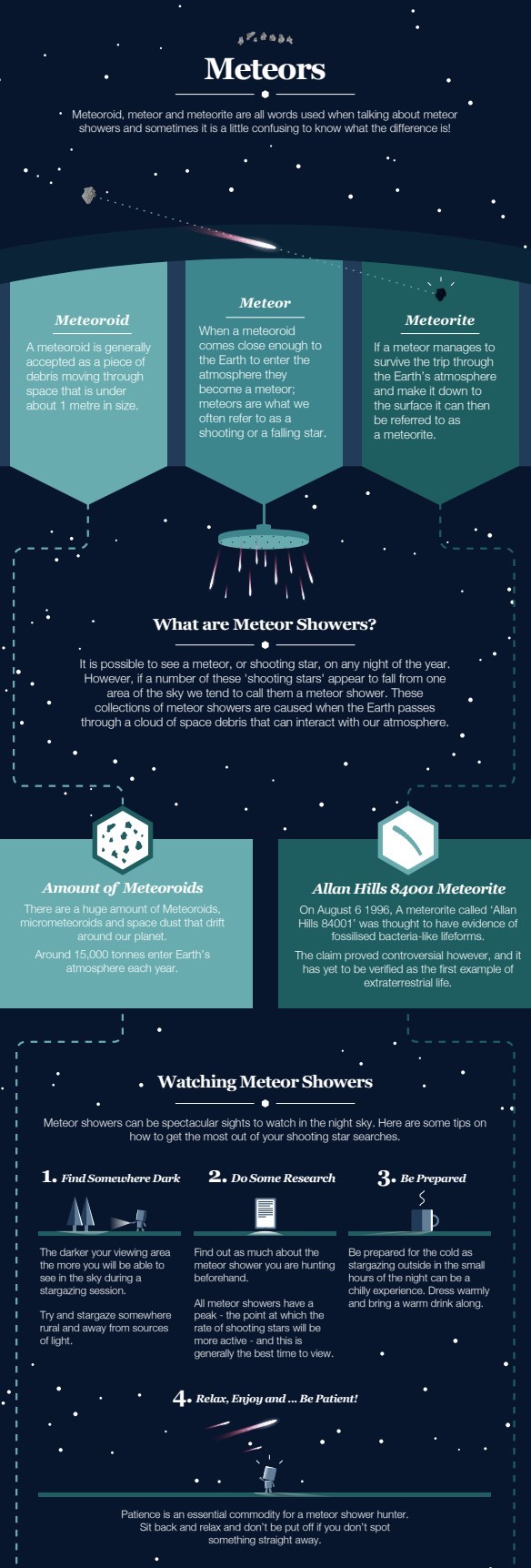
How asteroids leave behind such a debris trail is still uncertain. But upon hitting the Earth’s atmosphere at high speeds, the debris heats up and disintegrates in flashes of light- these are the meteors (also sometimes called shooting stars).
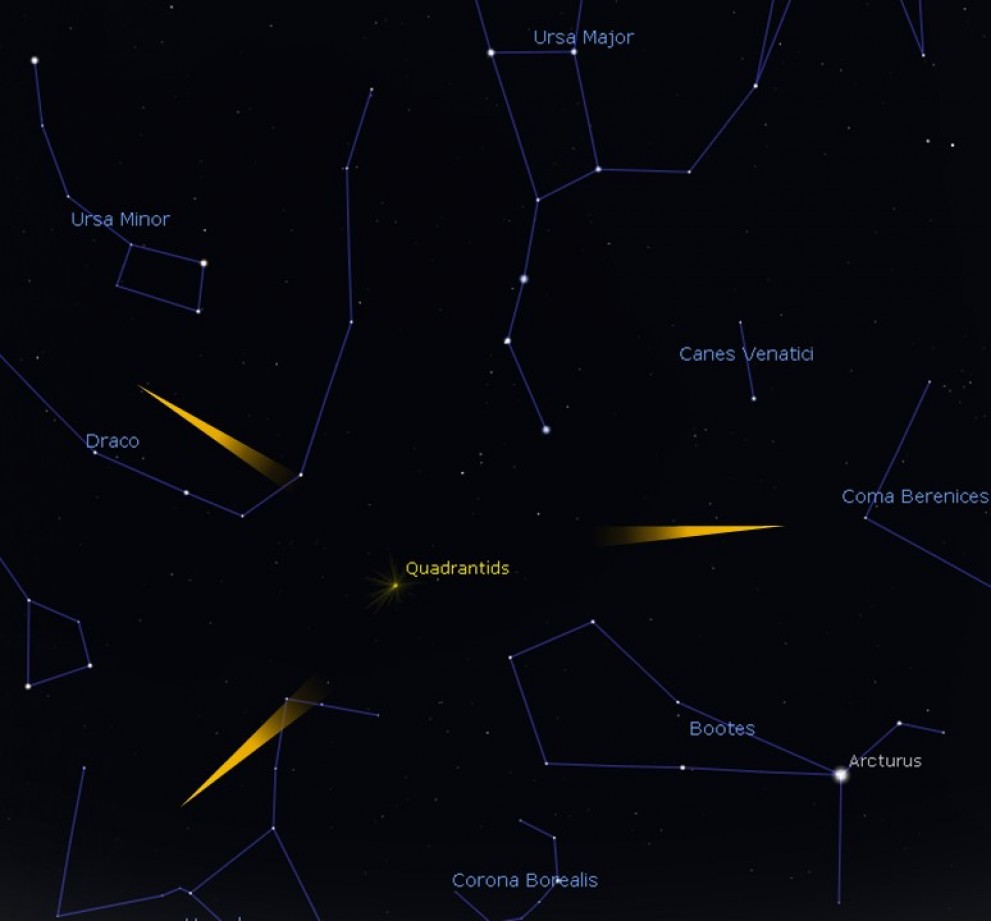
How to Watch from the UK
The Quadrantids are named after the now defunct constellation, Quadrans Muralis as this is the direction from which they appear to originate. But as Quadrans Muralis no longer exists as one of the official 88 constellations accepted by the International Astronomical Union (IAU), the radiant point is best found by looking near the handle of the Plough and the bright star Arcturus. Because the radiant is towards the northern edge of the constellation of Boötes, sometimes this meteor shower is called the Boötids.
While the meteors appear to originate from near the Plough, they are best seen 30 degrees away from the origin, so be sure to keep careful watch across the whole sky. Look up, keep an eye on the entire starry canvas above, and find a location as far from light pollution as you can.
The full moon will be up throughout the night and its bright light will provide less than ideal viewing conditions, but as a strong shower, its still worth heading out to spot a few of the brightest meteors.as on The radiant will rise higher into the sky during the early hours of 4 January, so it's best to head out around and after midnight.
The Quadrantids are active between 28 December and 12 January, but tend to have a very narrow peak time. So, as long as the weather plays ball, be sure to try to catch them on the night of the 3-4 January.
Meteor Infographic
Download our National Space Centre Meteor Shower Guide to make sure you are fully prepared!
Upcoming meteor showers for 2026 include:
Lyrids
Comet of Origin: C/1861 G1 (Thatcher)
Radiant: constellation Lyra
Peak Activity: 22-23 April 2026
Peak Activity Meteor Count: 10-20 meteors per hour
Eta Aquariids
Comet of Origin: 1P/Halley
Radiant: constellation Aquarius
Peak Activity: 5-6 May 2026
Peak Activity Meteor Count: up to 50 meteors per hour
Delta Aquariids
Comet of Origin: 96P/Machholz
Radiant: constellation Aquarius
Peak Activity: 30 July 2026
Peak Activity Meteor Count: up to 15 meteors per hour
Perseids
Comet of Origin: 109P/Swift-Tuttle
Radiant: constellation Perseus
Peak Activity: 12-13 August 2026
Peak Activity Meteor Count: up to 100 meteors per hour
Draconids
Comet of Origin: 21P/Giacobini-Zinner
Radiant: constellation Draco
Peak Activity: 8-9 October 2026
Peak Activity Meteor Count: up to 5 meteors per hour (In rare instances, fiery Draco has been known to spew forth many hundreds of meteors in a single hour.)
Orionids
Comet of Origin: 1P/Halley
Radiant: constellation Orion
Peak Activity: 21-22 October 2026
Peak Activity Meteor Count: up to 20 meteors per hour
Northern Taurids
Comet of Origin: 2P/Encke
Radiant: constellation Taurus
Peak Activity: 11-12 November 2026
Peak Activity Meteor Count: 5 meteors per hour
Leonids
Comet of Origin: 55P/Tempel-Tuttle
Radiant: constellation Leo
Peak Activity: 17-18 November 2026
Peak Activity Meteor Count: up to 10 meteors per hour
Geminids
Asteroid of Origin: 3200 Phaethon
Radiant: constellation Gemini
Peak Activity: 13-14 December 2026
Peak Activity Meteor Count: up to 150 meteors per hour
Ursids
Comet of Origin: 8P/Tuttle
Radiant: constellation Ursa Minor
Peak Activity: 21-22 December 2026
Peak Activity Meteor Count: up to 10 meteors per hour
Happy meteor-gazing!
Full references / credits:
(Banner image) Meteor showers. Credit: © National Space Centre
(1) A Quadrantids fireball meteor. Credit: Mike Lewinski CC BY 2.0 DEED (https://www.flickr.com/photos/ikewinski/49334338277)
(2) Quadrantids radiant. Credit: Stellarium