

Space Oddities
- 6th Oct 2026
- Author: Declan Bark
When you picture space, what is the first thing that comes to mind? Is it stars? The Moon? Sandra Bullock? Whatever it is, I’m sure you know a little bit about it and would be able to explain what you’ve seen. Stars are bright. The Moon is round. Gravity wasn’t scientifically accurate at all.
But what about those things that are a little bit weird? Things out there in our great cosmos that are unexplainable, hard to describe or just outright bizarre. Space is a mystical, magical place, and there might not be any moon-beam ice cream, but there are some crazy things to look at.
Join me as we try and get our heads around some of the most bizarre oddities in space and explain what’s going on!
The Great Nothing
Let’s start out by looking at… well not much actually! Also known as the Boötes void, The Great Nothing is a massive region where there isn’t much to see! Measuring a massive 330 million light-years in diameter, which if you don’t know is absolutely huge, The Great Nothing hosts only 60 galaxies. An area this size usually has around 2,000 galaxies within, making The Great Nothing a real anomaly.
When it was discovered in 1981, scientists were baffled at the new realisation that the universe isn’t a giant, evenly spread-out affair, but instead is a giant cosmic web of incomprehensible size. It makes you wonder though, what truly lies in those massive empty regions like The Great Nothing. Invisible Dark Matter? Absolutely nothing? Something else entirely? I don’t know what’s more unnerving.


Runaway Black Hole
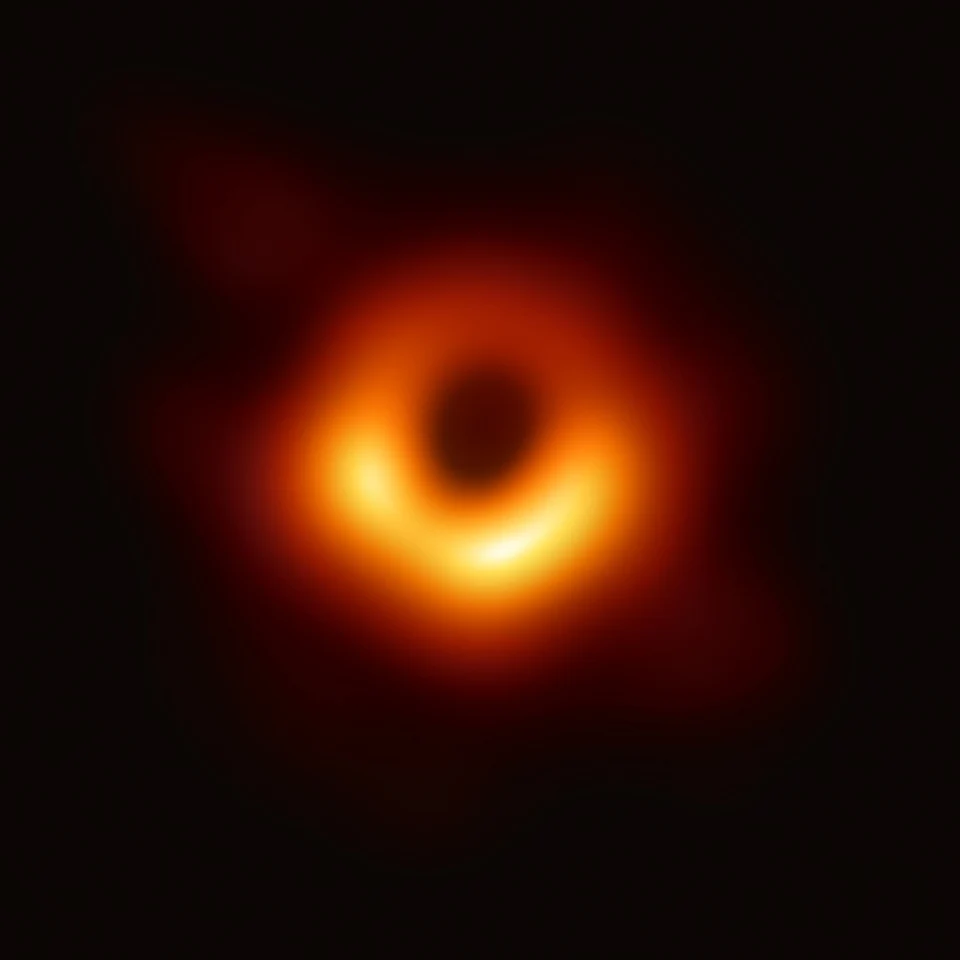
The James Webb Space Telescope was launched in 2021, with goals of studying the formations of galactic objects and researching the origins of life. It must’ve been surprising when it discovered the first ever rogue black hole flying through the cosmos. Designated RBH-1 (ten points for guessing what that acronym represents), this black hole has been spotted moving through space at a speed of up to 1,000 km per second – roughly the same as travelling from the National Space Centre to Berlin in a second.
Scientists think that RBH-1 was sent on its journey when two galaxies collided. The two supermassive black holes in their centres combined, but there were some teething problems between the two, causing some gravity shockwaves to be flung out. This caused the newly merged black holes to be slingshotted backwards, becoming RBH-1. As it flies, it leaves a trail of newly formed stars in its trail. It might be scary and terrifying to think that black holes can fly around, but at least RBH-1 leaves some positivity behind!
Saturn's Shapes
Based on my own research, which is mainly compromised of children yelling “SATURN!” at me, Saturn is one of the most popular planets in our Solar System. And rightly so! It has the very famous rings, and it’d float in a bath! But a lesser known, but very interesting aspect of the planet are the shapes that we’ve discovered on each pole.
Up in t'North, we’ve got Saturn’s famous hexagon – a massive storm first discovered in 1988 thanks to the work of the Voyager missions and astronomer David Godfrey. With a diameter more than twice the size of our entire planet and a hurricane eye larger than anything seen on Earth, this odd shape on the top of the ringed planet has scientists beyond baffled. The amount of light, gas composition and speed of the planet’s spin all contribute to making this perfect hexagon. And it doesn’t stop there! In September 2026, scientists discovered a decagon forming on Saturn’s south pole for similar reasons.
Scientists still have more to learn about these shapes, leaving them a real mystery and oddity on one of our most popular planets.


Gravitational Lensing
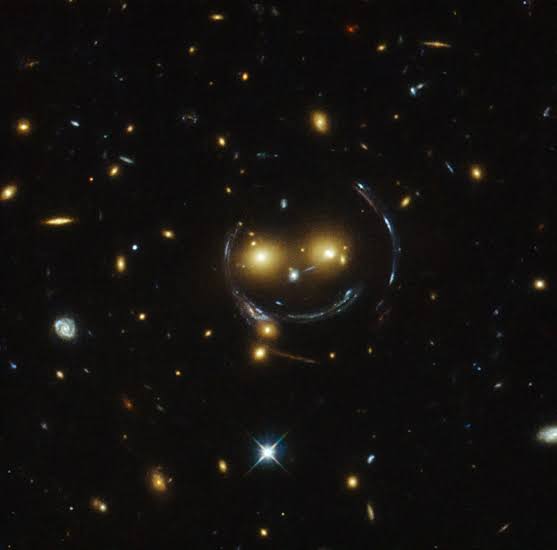
Now folks, bear with me here. Gravitational lensing sounds complicated and while researching for this blog, I came across the words “Einstein’s general relativity” and had a mild panic. But it’s not that complicated, it’s just very, very odd.
As it says on the tin, gravitational lensing is when gravity acts as a lens! Lenses take in light, and then can bend it and slow it down, so when it comes out the other side it looks clearer and even slightly different. When light hits the strong gravitational pull of something like a galaxy, it gets pulled on and curved slightly, and just like a lens you find in your glasses would, it makes things look different. It can help us see further out into space, as telescope lenses tend to do, and we can even see space objects that have things in front of them. The light from a star cluster, for example, will curve around a massive galaxy that could’ve been blocking it from our view, but thanks to gravitational lensing, we can see the star cluster (albeit potentially in a different position).
Gravitational lensing makes things bulge, swirl and look very strange out in space, but it is also very useful to astronomers to find out about these distant places that may have been blocked from view! Thank you, universe, for the creation of natural lenses!
1I/‘Oumuamua
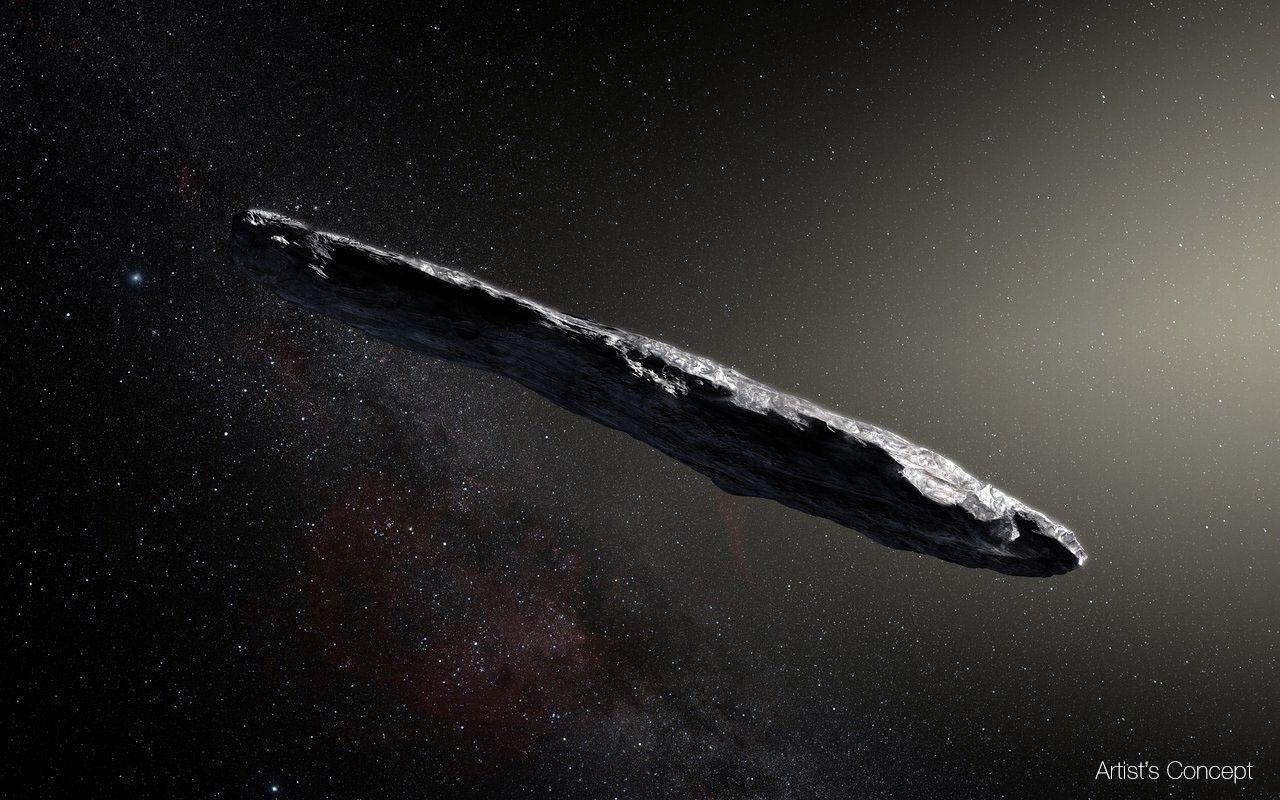
Currently, our Solar System, is home to a mysterious comet called ‘Oumuamua. I say “currently” because this strange red cigar-shaped object wasn’t always with us. It is the first confirmed interstellar object to visit our Solar System, and one day will fly away, leaving us forever. Moving so fast that the Sun couldn’t capture it, ‘Oumuamua, pronounced “oh-MOO-ah-MOO-ah”, is odd because of its shape, unknown origin, incredible speed and the fact it has no tail.
Where did ‘Oumuamua come from in our galaxy? It’s hard to say, but scans did show that the extremely long comet erratically tumbled into and is going to erratically tumble out of our Solar System, much like me on an ordinary day at the National Space Centre.
As it moved so fast, the only scans that a team of astronomers, using the University of Hawaii’s Pan-STARRS1 telescope, could get were far away ones, showing ‘Oumuamua as a speck of light. Meaning this comet still holds so many mysteries we truly will never get to solve. Why did it not leave any trails like any normal comet should? Where is it going next? Does it know Experiment 626?
Moon Illusions
For our last entry, we’re going to look at something less odd about space, and something more odd about ourselves. Don’t worry, this isn’t a psychological test or anything, but our brains and eyes are weird.
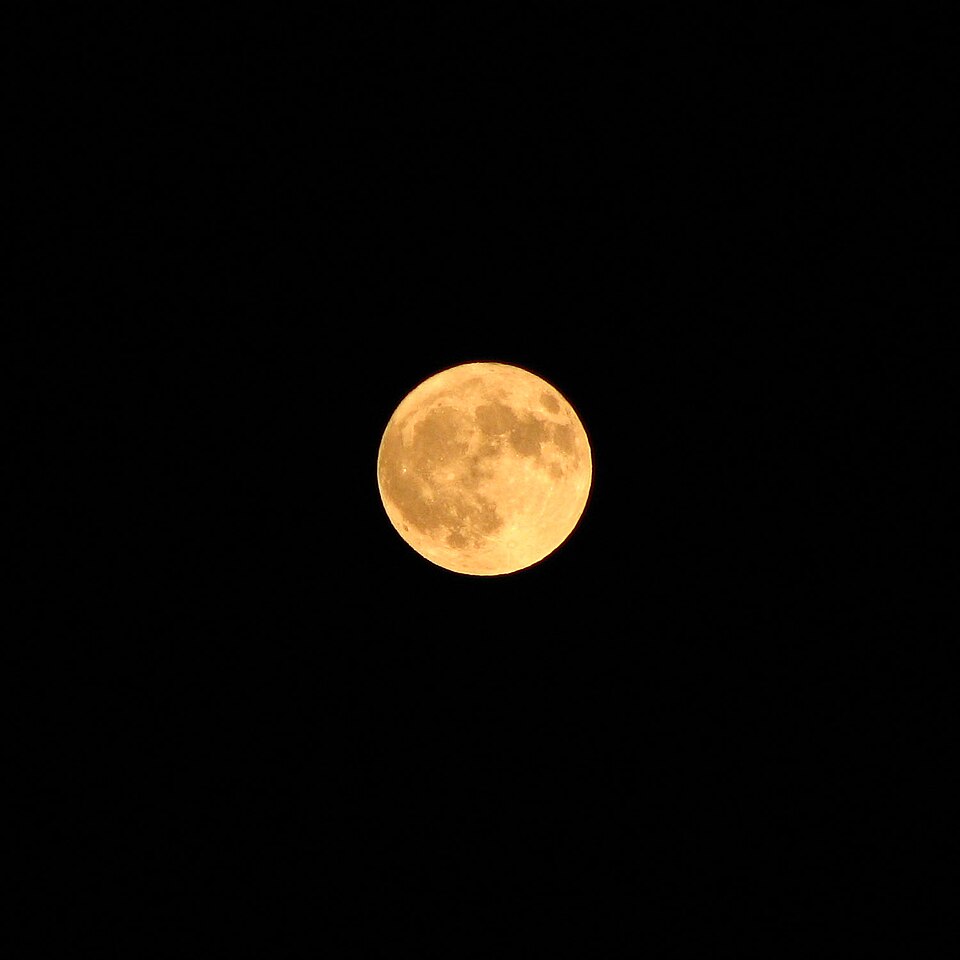
Picture this. You’re out in the evening and you see the Moon rise on the horizon! Wow, so beautiful. So yellow! But why does it look so big near the horizon? It’s not changed size, has it? Is it getting closer? PANIC!
No, it’s not. And in fact, when on the horizon, the Moon isn’t any different than usual. Instead, it's our brains that make the Moon look so much bigger when it’s on the horizon than when it’s in the night sky. The Moon appearing bigger is simply an optical illusion that our mind tricks itself with. When you see the Moon next to familiar objects, like houses and trees, your brain gets confused by the distance and scale of the Moon. When it appears in the open sky, with nothing to compare it to, it then looks much smaller. The Moon also looks a little yellower when lower down thanks to the colour spectrum and Earth’s atmosphere getting in the way. As light hits our atmosphere, it hits all of those gas particles and molecules we need to breathe and not freeze to death, causing the light to scatter in different directions.
So, if you want to get a closer look at the Moon without a telescope, let your mind trick you and start looking as it starts to rise.
So, space is kinda weird, huh? From weirdly long comets of unknown origins to… the absence of anything, we truly live in a massively unexplained and wild universe! Anything is possible, and as we grow and scan further and further into the reaches of the cosmos, who knows what other mysterious and questionable things we might uncover! Whatever the case, I’ll be here to write a blog about it to make sure we all stay curious!
By the way, if you were here actually looking for the Space Oddities gallery at the National Space Centre or you just misspelled the David Bowie song, my apologies. But thanks for the read!
Full references/credits:
(Banner) Rosette Nebula. Public Domain
(1) Hubble Deep Field. Credit: NASA, ESA, CSA, and STSc
(2) The Boötes Void. Credit: Creative Commons
(3) M87. Credit: ESO
(4) Saturn's Hexagon. Credit: NASA
(5) Saturn's Decagon. Credit: NASA
(6) Hubble Gravitational Lensing. Credit: NASA
(7) 'Oumuamua. Credit: NASA
(8) Yellow Moon. Credit: Creative Commons
(9) Stars and Space. Credit: NASA
