

Voyager 1 – One Light-Day From Earth
- 12th Nov 2026
- Author: David Southworth
Voyager 1, launched in 1977, is currently the most distant human-made object from the Earth, and is about to reach a significant milestone in its ongoing journey – a distance of one light-day from Earth.
What Is a Light-Day?
We often use light-years as a measure of large distances in space. One light-year is the distance that light travels (in a vacuum) in a year, equal to around 9.46 trillion km (that’s 946 followed by ten zeros!). Using light-years instead of miles or kilometres makes the numbers involved much more manageable – for example, the closest star to the Solar System is Proxima Centauri, and it’s easier to say that it’s 4.3 light-years away, than 40.2 trillion km.
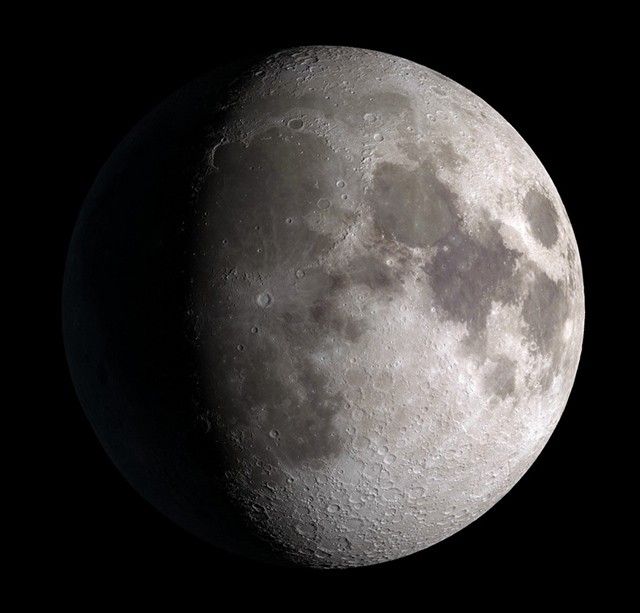
Following the same principle, but used far less frequently, we occasionally use the terms light-second, light-minute, light-hour, and light-day. For example, light takes about 1.3 seconds to travel from the Moon to the Earth, so that distance is 1.3 light-seconds. Similarly, light from the Sun takes 8 minutes 20 seconds to reach us here on Earth, so the distance is just over eight light-minutes. It really is as simple as that.
When Did Voyager 1 Reach Earlier Milestones?
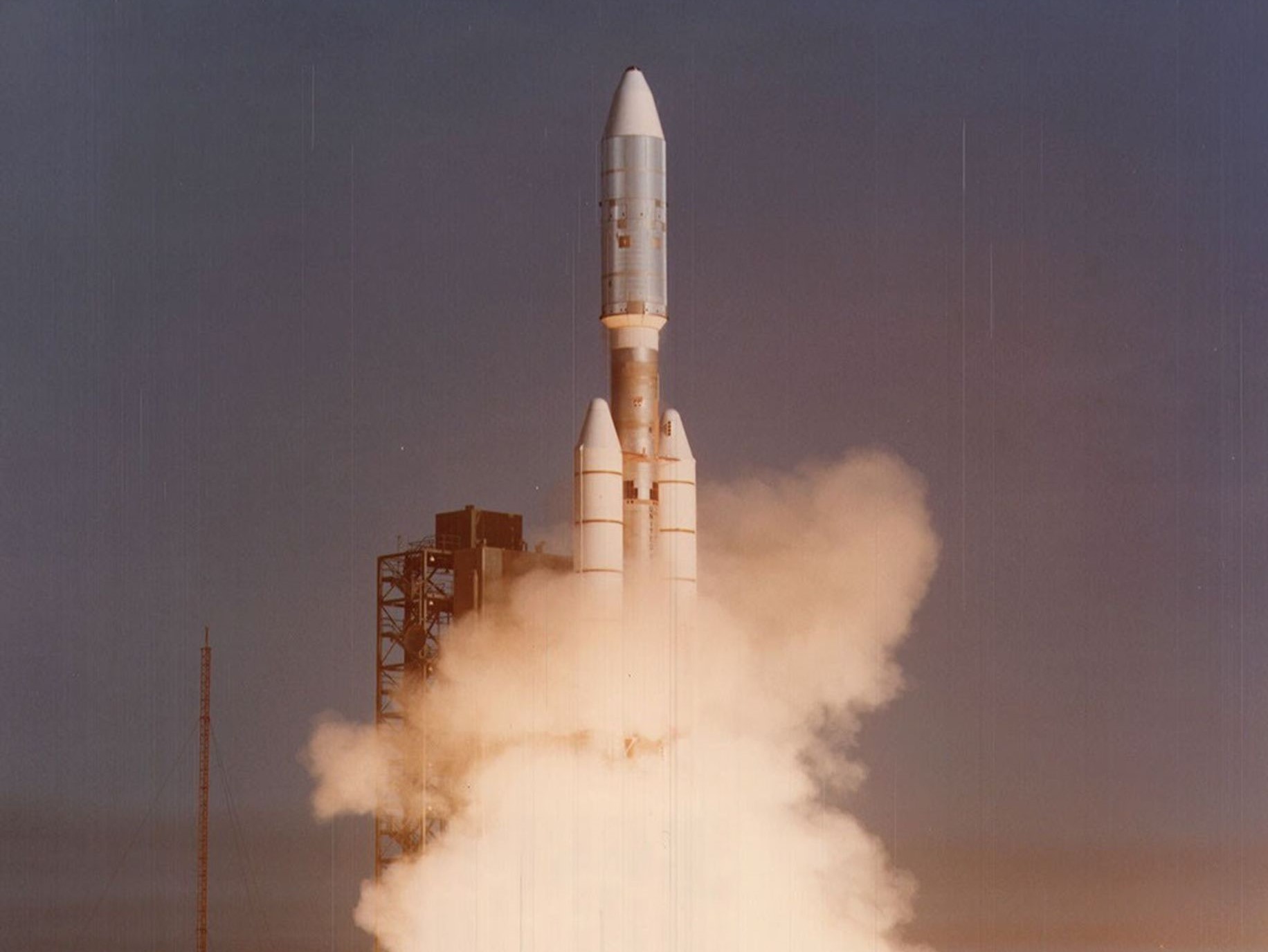
Voyager 1 launched just before 13:00 (UTC) on 5 September 1977. The launch took it on an initial escape velocity of over 50,000 km/h. This means that it was able to cover a distance of one light-second (around 300,000km) in just a few hours, making it that same day. Only three weeks later, on 26 September 1977, it reached a distance of one light-minute.
After that, the timescales get longer. By the time Voyager 1 made it to one light-hour from Earth, on 30 April 1980, it had already left Jupiter behind by a full year, and was only a few months from reaching Saturn. And now it’s approaching one light-day from Earth – this means that signals from the spacecraft will now take a full 24 hours to reach us. Voyager 1 will reach this milestone just after 10:00 (UTC) on Wednesday 18 November.
What Did Voyager 1 Discover?
Voyager 1, and its companion spacecraft Voyager 2, followed up on visits to the Outer Solar System earlier in the 1970s by Pioneer 10 and Pioneer 11. Both Voyagers performed flyby manoeuvres of Jupiter and Saturn. While Voyager 2 subsequently went on to visit Uranus and Neptune (still the only spacecraft to do so), Voyager 1 focused on Titan, Saturn’s largest moon. Following that visit, its trajectory took it on a path out of the Solar System.
Voyager 1 took detailed images of known features, such as Jupiter’s Great Red Spot, the rings of Saturn, and several moons of these two giant planets. It was able to analyse, in greater detail, features such as the atmosphere of Titan and the composition of gases in Saturn’s atmosphere.
It also made new discoveries. It discovered Jupiter’s faint ring system, as well as two new moons of Jupiter – Metis and Thebe. These are small, inner moons of Jupiter – small enough that Voyager 1’s images showed each of them as little more than a dot. It wasn’t until the 1990s, and the Galileo mission to Jupiter, that we imaged them in more detail.
Perhaps its most stunning discovery was significant volcanic activity on Jupiter’s moon Io (now known to be the most geologically active object in the Solar System), and the effects of that activity on the traces of matter detected in Jupiter’s magnetosphere.


What Next?
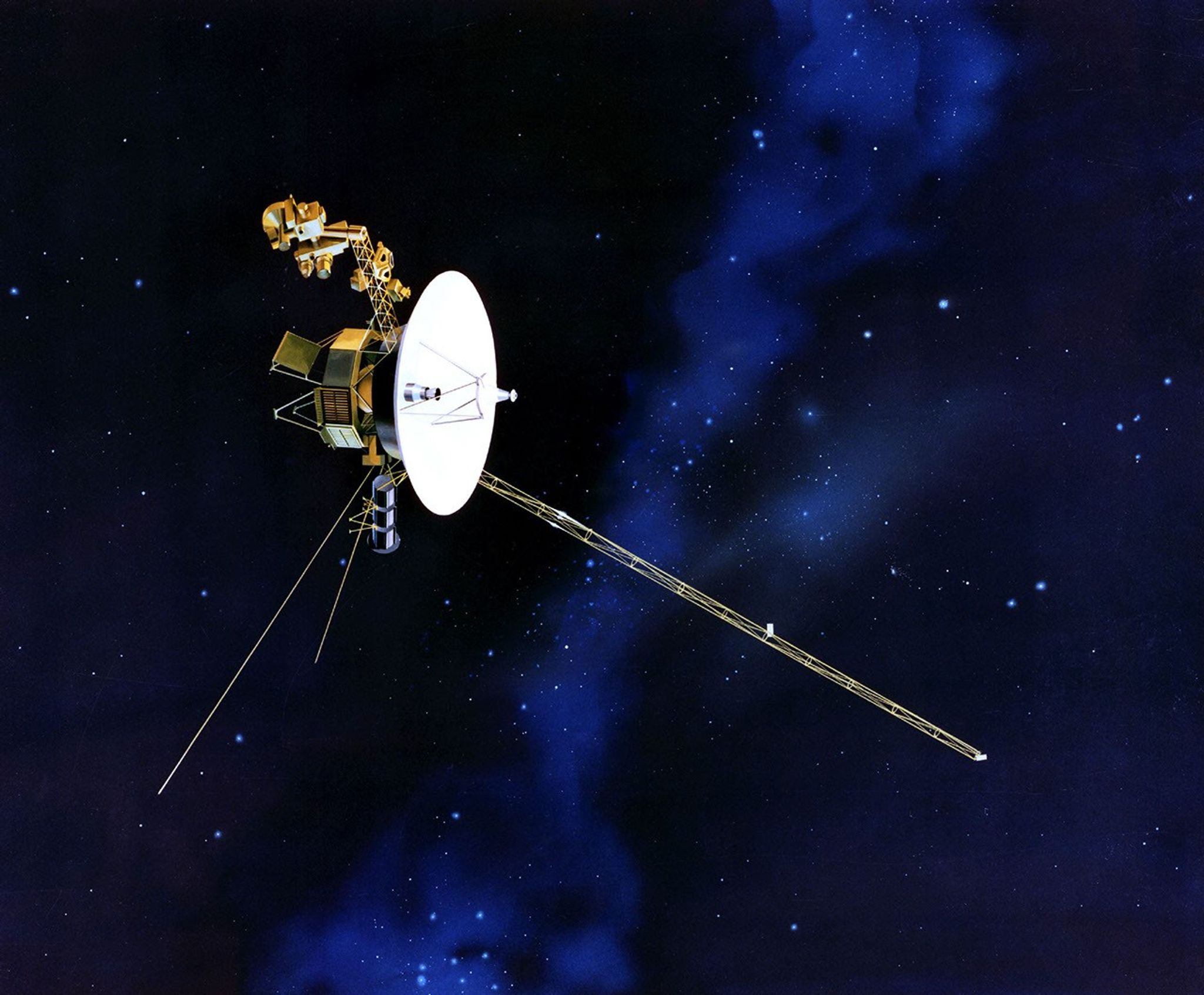
Nothing really changes for Voyager 1 having reached the milestone of one light-day. In August 2012 it became the first spacecraft to cross the heliopause and enter interstellar space, and it will continue on its path away from the Solar System.
Of more significance is its dwindling power, and reducing ability to send communications to Earth. Currently, only two of its eleven instruments are still operational – a magnetometer and an instrument measuring electron-density. The rest are either broken, or have been disabled to conserve energy. In just a few years, Voyager 1 will no longer have sufficient power to operate either of these, and in about ten years, it will be out of range of the Deep Space Network, making communication unfeasible.
But although we won’t receive any further information from it after that point, its journey continues. Will it ever encounter another star system? Well, astronomers have conducted complex calculations based on dynamic modelling of the locations and velocities of stars in our galaxy. And they have concluded that its closest encounter within the next 5 million years will be with a star with the catchy name of TYC 3135-52-1, located in the constellation of Cygnus.
They estimate that this will be in around 300,000 years. Could that be an opportunity for any potential alien civilisations that happen to live on a planet orbiting that star to find this strange celestial visitor giving them proof of our own existence? Almost certainly not – that encounter will be at a distance of almost one light-year, around 2,000 times the orbital distance of any of the planets in our Solar System. So there’s every chance that Voyager’s future remains a lonely vigil through the depths of interstellar space, with no random encounters with extra-terrestrial lifeforms to brighten up its unwavering journey.
Why not read more about the Voyager Image Archive – 80,000 images taken by Voyager 1, and its companion space probe Voyager 2, held by the National Space Centre.
Full References/Credits
(1) An artist’s impression of Voyager 1 in deep space (NASA/JPL-Caltech)
(2) Moonlight takes 1.3 seconds to reach the Earth (NASA)
(3) The launch of Voyager 1 on 5 September 1977 (NASA/JPL-Caltech/KSC)
(4a) A Voyager 1 image of Jupiter’s moon Io, showing a volcanic eruption (NASA/JPL)
(4b) A Voyager 1 image of Saturn’s moon Titan, showing its significant atmosphere (NASA/JPL)
(5) An artist’s impression of Voyager 1 on its journey away from the Solar System (NASA/JPL-Caltech)
